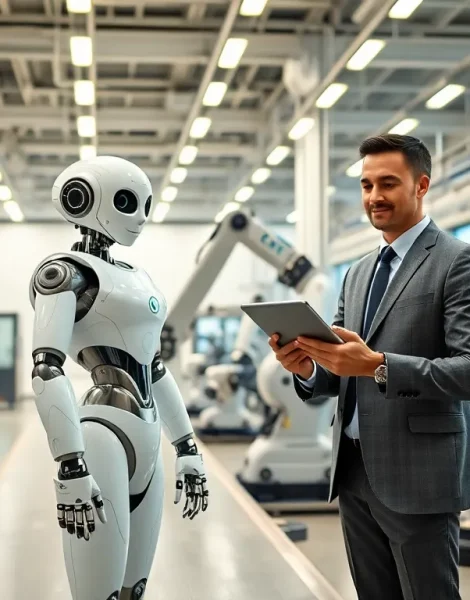
Robotics trends 2026 will reshape how industries operate, how workers collaborate with machines, and how society addresses pressing challenges like sustainability. The pace of change in robotics has accelerated dramatically over the past few years. Advances in artificial intelligence, materials science, and manufacturing have converged to make robots smarter, more capable, and more accessible than ever before.
This year promises significant shifts. Humanoid robots are moving from labs to factory floors. Collaborative robots are finding new applications in healthcare, agriculture, and small businesses. Soft robotics is making machines safer and more versatile. And the push for energy-efficient systems is driving innovation across the entire sector.
This article breaks down the key robotics trends 2026 will bring, and what they mean for businesses, workers, and everyday life.
Table of Contents
ToggleKey Takeaways
- Robotics trends 2026 highlight AI-powered autonomy, enabling robots to learn, adapt, and make real-time decisions with minimal human intervention.
- Humanoid robots are moving from labs to factory floors, with companies like Tesla and Figure AI deploying them in manufacturing facilities.
- Collaborative robots (cobots) are expanding into healthcare, agriculture, and small businesses, with entry-level models now available under $25,000.
- Soft robotics breakthroughs allow machines to safely handle fragile items and assist with tasks ranging from surgery to exploration.
- Energy efficiency and sustainability are driving robotics innovation, with new robots consuming up to 40% less energy and featuring recyclable, modular components.
- Expect cobot adoption to grow by 30% or more in 2026, especially in food processing, logistics, and eldercare sectors.
AI-Powered Autonomy and Decision-Making
Artificial intelligence has become the engine behind most robotics trends 2026 will showcase. Robots are no longer just following pre-programmed instructions. They’re learning, adapting, and making decisions in real time.
Machine learning algorithms now allow robots to process visual data, recognize objects, and respond to unexpected situations. A warehouse robot, for example, can identify a misplaced item and reroute its path without human input. Factory robots can detect defects in products and adjust their actions accordingly.
Large language models (LLMs) are also entering the picture. Some manufacturers are integrating LLM-based interfaces so operators can give robots verbal commands. Instead of reprogramming a machine, a technician might simply say, “Move the assembly arm 10 degrees to the left.” The robot interprets and executes.
This level of autonomy reduces downtime, cuts labor costs, and improves safety. But it also raises questions about oversight and accountability. Who’s responsible when an autonomous robot makes a mistake? Companies are still working through these issues as robotics trends 2026 push boundaries further.
The bottom line: expect robots that think faster, learn quicker, and require less hand-holding than ever before.
Humanoid Robots Enter the Workforce
Humanoid robots have long captured public imagination. Now they’re stepping out of science fiction and into real workplaces.
Companies like Tesla, Boston Dynamics, and Figure AI have made significant progress. Tesla’s Optimus robot is being tested in its own factories. Figure AI has partnered with BMW to deploy humanoid robots on automotive production lines. These machines walk, grip objects, and perform tasks that previously required human hands.
Why humanoids? Existing factories and warehouses were designed for human workers. A humanoid form factor means robots can use the same tools, walkways, and workstations without expensive retrofits. This makes adoption faster and cheaper.
Robotics trends 2026 suggest humanoids will first appear in roles like material handling, simple assembly, and quality inspection. They won’t replace skilled workers overnight, but they will take over repetitive, physically demanding tasks.
Challenges remain. Battery life limits operational hours. Fine motor skills still lag behind human dexterity. And the cost per unit remains high. But prices are falling, and capabilities are improving each quarter.
By year’s end, expect to see humanoid robots working alongside humans in at least a dozen major manufacturing facilities worldwide.
Collaborative Robots Expand Across Industries
Collaborative robots, often called cobots, are designed to work safely alongside humans. Unlike traditional industrial robots, they don’t need cages or safety barriers. Sensors and force-limiting technology allow them to stop immediately if they contact a person.
Cobots have already transformed manufacturing. Now, robotics trends 2026 are pushing them into new sectors.
In healthcare, cobots assist with physical therapy, help move patients, and even support surgeons during procedures. In agriculture, they pick fruit, sort produce, and handle delicate plants. Small businesses use cobots for packaging, labeling, and light assembly.
The appeal is straightforward: cobots are affordable, easy to program, and flexible. A bakery can deploy a cobot to box pastries one day and switch it to decorating cakes the next. Setup takes hours, not weeks.
Prices have dropped significantly. Entry-level cobots now cost under $25,000, within reach for many small and medium enterprises. This democratization is one of the most important robotics trends 2026 will accelerate.
Expect cobot adoption to grow by 30% or more this year, especially in food processing, logistics, and eldercare. The line between robot and coworker keeps getting blurrier.
Advances in Soft Robotics and Dexterity
Traditional robots are rigid. They’re made of metal and hard plastics, which limits what they can safely touch or handle. Soft robotics changes that equation.
Soft robots use flexible materials, silicone, rubber, fabric, to create machines that bend, stretch, and squeeze. They’re ideal for tasks involving fragile items: picking strawberries, handling eggs, or assisting with surgery.
Robotics trends 2026 include major breakthroughs in soft robotic grippers. New designs can sense pressure, adjust grip strength, and even detect the texture of objects. A soft gripper can pick up a glass vase and a steel bolt with equal precision.
Researchers are also developing soft robotic exoskeletons. These wearable devices help people lift heavy loads, assist those with mobility issues, and reduce workplace injuries. Early models are already in use in logistics and rehabilitation settings.
Another area to watch: soft robots for exploration. Their flexibility makes them perfect for squeezing into tight spaces, collapsed buildings, underwater caves, or the human digestive tract.
The technology is still maturing. Durability and actuation speed need improvement. But soft robotics is poised to become a mainstream solution across multiple industries this year.
Sustainability and Energy Efficiency in Robotics
Sustainability has become a priority across every industry. Robotics is no exception.
Robotics trends 2026 reflect a growing focus on energy efficiency. Manufacturers are redesigning motors, control systems, and power supplies to reduce electricity consumption. Some new industrial robots use 40% less energy than models from just five years ago.
Battery technology is advancing too. Lithium-ion remains dominant, but solid-state batteries are entering the market. These offer higher energy density, faster charging, and longer lifespans, critical for mobile robots that need extended operational time.
Recyclability is another concern. Companies are building robots with modular components that can be easily replaced, refurbished, or recycled. This reduces e-waste and extends product lifecycles.
Some robotics firms are also targeting sustainable applications directly. Robots now plant trees, sort recyclables, clean up ocean plastic, and monitor ecosystems. These applications align with global environmental goals and attract investment from ESG-focused funds.
The push for sustainability isn’t just about ethics. It’s about economics. Energy-efficient robots cost less to operate. Recyclable components reduce total cost of ownership. Green credentials help win contracts with environmentally conscious clients.
Expect energy efficiency and sustainability to influence purchasing decisions more than ever in 2026.