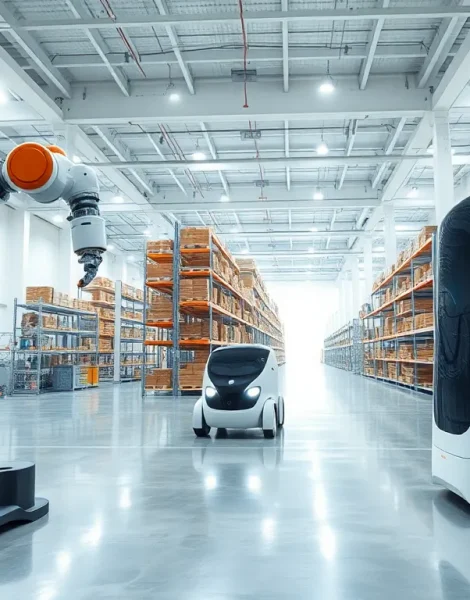
Robotics examples surround us in ways most people don’t notice. From the warehouse floor to the operating room, robots handle tasks that were once impossible, or just painfully tedious, for humans. The global robotics market hit $55 billion in 2024 and shows no signs of slowing down. Why? Because businesses across every sector have discovered that robots don’t call in sick, don’t need coffee breaks, and can work with precision that makes even the steadiest human hand look shaky.
This article breaks down the most impactful robotics examples across key industries. Whether you’re curious about factory automation, surgical assistants, or the robot vacuum roaming your living room, you’ll find real applications changing how we live and work. Let’s jump into the machines reshaping our world.
Table of Contents
ToggleKey Takeaways
- Robotics examples span industries from manufacturing and healthcare to agriculture and home use, with the global market reaching $55 billion in 2024.
- Industrial robots dominate automotive and electronics manufacturing, handling repetitive tasks with precision and consistency that humans cannot match.
- Surgical robots like the da Vinci system have performed over 10 million procedures, offering smaller incisions and faster patient recovery.
- Consumer robotics examples such as Roomba vacuums and sidewalk delivery robots have become mainstream, with millions of units deployed worldwide.
- Agricultural robots address labor shortages and sustainability by harvesting crops, eliminating weeds with lasers, and reducing pesticide use by up to 90%.
- From warehouse automation to telepresence healthcare, these robotics examples demonstrate how machines are reshaping work and daily life across every sector.
Industrial and Manufacturing Robots
Industrial robots remain the backbone of modern manufacturing. These machines weld car frames, assemble electronics, and package products with speed and accuracy humans simply can’t match.
Automotive Assembly Lines
Car manufacturers pioneered industrial robotics examples decades ago. Today, a single automotive plant might use over 1,000 robots. FANUC, ABB, and KUKA dominate this space with articulated arm robots that weld, paint, and install components. Tesla’s Fremont factory, for instance, relies heavily on robotic arms for body assembly and battery pack installation.
Electronics Manufacturing
Smartphones, laptops, and circuit boards require extreme precision. Pick-and-place robots handle components smaller than a grain of rice, positioning them with micron-level accuracy. Foxconn, Apple’s primary manufacturer, operates thousands of these robotics examples across its facilities.
Warehouse and Logistics Automation
Amazon changed the game with its acquisition of Kiva Systems (now Amazon Robotics). These mobile robots carry entire shelving units to human workers, cutting walking time dramatically. The result? Faster order fulfillment and fewer errors. Competitors like Locus Robotics and Fetch Robotics offer similar solutions to companies without Amazon’s resources.
These industrial robotics examples share common traits: they handle repetitive tasks, work in structured environments, and deliver consistent output 24/7.
Medical and Healthcare Robotics
Healthcare robotics examples have moved from science fiction to standard practice. Hospitals now deploy robots for surgery, rehabilitation, and even patient interaction.
Surgical Robots
The da Vinci Surgical System stands as the most recognized surgical robot worldwide. Surgeons control its arms through a console, performing minimally invasive procedures with enhanced precision. Over 10 million surgeries have used da Vinci systems since their introduction. The benefits include smaller incisions, reduced blood loss, and faster patient recovery.
Newer robotics examples in surgery include the Mako system for orthopedic procedures. It helps surgeons plan and execute knee and hip replacements with millimeter precision.
Rehabilitation Robots
Stroke patients and those with spinal injuries use robotic exoskeletons for physical therapy. Devices like the Ekso GT help patients relearn walking by providing powered leg movement. These robotics examples track progress through sensors and adjust assistance levels automatically.
Hospital Logistics
Robots now deliver medications, meals, and linens throughout hospitals. TUG robots from Aethon transport supplies autonomously, avoiding obstacles and calling elevators. This frees nursing staff to focus on patient care instead of hauling carts.
Telepresence Robots
Doctors use telepresence robots to consult with patients remotely. During the COVID-19 pandemic, these robotics examples reduced virus exposure while maintaining care quality.
Service and Consumer Robots
Service robots work alongside, or instead of, humans in customer-facing roles. Consumer robots, meanwhile, have entered millions of homes.
Home Cleaning Robots
The Roomba vacuum cleaner introduced many people to household robotics examples. iRobot has sold over 40 million units since 2002. Today’s models map rooms, empty their own dustbins, and avoid pet waste (yes, that’s a real selling point). Competitors like Roborock and Ecovacs offer mopping capabilities alongside vacuuming.
Delivery Robots
Sidewalk delivery robots from companies like Starship Technologies and Kiwibot carry food and packages to customers. College campuses and urban neighborhoods have become testing grounds for these robotics examples. Starship alone has completed over 5 million autonomous deliveries.
Restaurant and Hospitality Robots
Restaurants use robots for food delivery to tables, freeing servers for customer interaction. Bear Robotics’ Servi robot navigates dining rooms while carrying multiple plates. Some restaurants in Japan feature robot bartenders and chefs, though these serve more as attractions than practical solutions.
Social and Companion Robots
Sony’s Aibo robot dog provides companionship without the mess of a real pet. More seriously, robots like PARO, a therapeutic seal, help dementia patients in care facilities. These robotics examples show emotional connections can form between humans and machines.
Agricultural and Environmental Robotics
Farming faces labor shortages and environmental pressures. Agricultural robotics examples address both challenges.
Harvesting Robots
Picking fruits and vegetables requires dexterity that robots struggled with until recently. Now, companies like Abundant Robotics (apples) and Agrobot (strawberries) deploy machines that identify ripe produce and harvest it without bruising. These robotics examples use computer vision and soft grippers to handle delicate crops.
Weeding and Spraying Robots
Chemical herbicides damage soil and water supplies. Robot weeders like those from Carbon Robotics use lasers to kill weeds without chemicals. Others spot-spray only where needed, reducing pesticide use by up to 90%. These robotics examples help farms move toward sustainable practices.
Autonomous Tractors
John Deere made headlines with its fully autonomous tractor in 2022. Farmers can monitor and control these machines remotely while they plow, plant, and cultivate fields. GPS guidance ensures precise row spacing and reduces overlap.
Environmental Monitoring
Drones, technically flying robots, survey crop health across thousands of acres. They detect irrigation problems, pest infestations, and nutrient deficiencies before damage spreads. Ocean-going robots like Saildrone collect climate data across remote waters.
These agricultural robotics examples help produce more food with fewer resources.