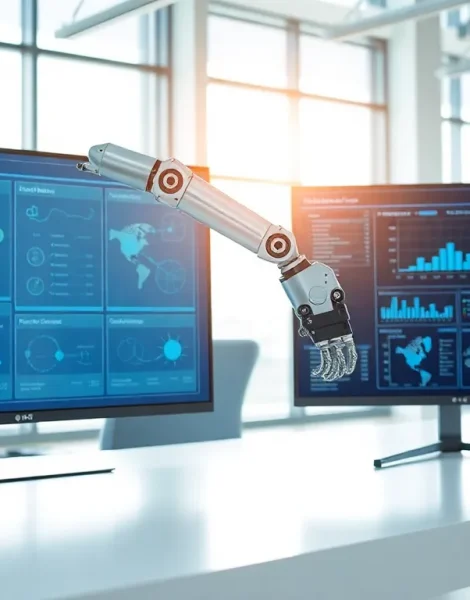
Robotics vs automation, two terms often used interchangeably, yet they represent distinct concepts. Understanding their differences helps businesses make smarter investment decisions. Robotics involves programmable machines that perform physical tasks. Automation refers to systems that execute processes with minimal human input. Both technologies drive efficiency, but they serve different purposes. This article breaks down what sets robotics apart from automation, when each option makes sense, and how industries apply them today.
Table of Contents
ToggleKey Takeaways
- Robotics vs automation represents distinct concepts: robotics involves programmable physical machines, while automation refers to any system that reduces manual human input.
- Robotics is a subset of automation—all robots automate tasks, but not all automation requires physical machinery.
- Choose robotics when tasks involve physical manipulation, variable conditions, dangerous environments, or require high precision.
- Software automation deploys faster and cheaper, making it ideal for digital tasks like data processing, scheduling, and communications.
- Industries like manufacturing and healthcare combine both technologies—using robots for physical work and automation for administrative processes.
- Over 500,000 industrial robots were installed globally in 2023, reflecting growing demand for precise, adaptable physical task execution.
What Is Robotics?
Robotics is the field of engineering focused on designing, building, and operating robots. A robot is a programmable machine capable of carrying out physical actions. These machines can sense their environment, process information, and respond accordingly.
Robots typically include three main components:
- Sensors that gather data from the surroundings
- Control systems (software or hardware) that process inputs and make decisions
- Actuators that enable movement or physical manipulation
Industrial robots weld car frames. Surgical robots assist doctors in operating rooms. Warehouse robots pick and pack orders. Each example shows how robotics handles tasks requiring physical interaction with the real world.
The robotics industry has grown rapidly. According to the International Federation of Robotics, over 500,000 industrial robots were installed globally in 2023 alone. This growth reflects increased demand for machines that can perform precise, repetitive physical work.
Robotics differs from simple machinery because robots can be reprogrammed for different tasks. A traditional machine performs one function. A robot adapts to new requirements through software updates or reconfiguration.
What Is Automation?
Automation is the use of technology to perform tasks without human intervention. It covers a broad range of systems, from simple timers to sophisticated software platforms. The goal is consistent execution with minimal manual effort.
Automation exists in two primary forms:
- Fixed automation uses specialized equipment for high-volume, repetitive tasks. Think assembly lines that produce identical products.
- Programmable automation allows equipment to be reconfigured for different products or processes through code changes.
Software automation has exploded in recent years. Email marketing platforms send campaigns automatically. Customer service chatbots answer common questions. Accounting software processes invoices without human review.
Automation doesn’t always involve physical machines. A script that backs up files every night is automation. A thermostat that adjusts temperature based on schedules is automation. The common thread is reducing manual steps through systematic processes.
Businesses adopt automation to cut costs, reduce errors, and speed up operations. McKinsey estimates that 60% of occupations have at least 30% of activities that could be automated with current technology.
Core Differences Between Robotics and Automation
The robotics vs automation debate often stems from confusion about scope. Here’s how they differ:
Physical vs. Non-Physical Systems
Robotics requires physical hardware, machines that move, grip, weld, or manipulate objects. Automation can be purely digital. A robot arm assembles products. An automated email sequence sends messages. Both reduce human labor, but only one involves physical machinery.
Flexibility and Adaptability
Robots excel at adapting to variable conditions. Modern robots use sensors and AI to adjust their actions based on what they detect. Automation systems typically follow predetermined rules without real-time adaptation.
Complexity and Cost
Robotics implementations generally cost more upfront. Robots require physical installation, safety systems, and maintenance. Software automation often deploys faster and cheaper. A business might automate invoicing in days but spend months implementing robotic manufacturing.
Human Interaction
Collaborative robots (cobots) work alongside humans safely. Traditional automation often replaces human involvement entirely. This distinction matters for workplaces where human judgment remains valuable.
| Factor | Robotics | Automation |
|---|---|---|
| Physical presence | Yes | Not always |
| Initial cost | Higher | Variable |
| Flexibility | High | Moderate |
| Setup time | Longer | Often shorter |
Robotics is a subset of automation. All robotic systems involve automation, but not all automation involves robotics. A robotic welding arm automates welding. But automated payroll processing has no robotic component.
When to Choose Robotics Over Automation
The robotics vs automation decision depends on specific business needs. Robotics makes sense in these scenarios:
Physical task requirements. If the job involves moving, assembling, or manipulating objects, robotics is likely necessary. Warehouses use robots to transport goods. Manufacturers deploy them for assembly and packaging.
Variable conditions. When tasks require adaptation to changing inputs, robots outperform fixed automation. A robot can adjust its grip based on object shape. Traditional automated systems cannot.
Dangerous environments. Robots handle hazardous materials, extreme temperatures, and contaminated spaces. They protect human workers from harm while maintaining productivity.
Quality demands. Robots deliver consistent precision. Medical device manufacturing, aerospace components, and electronics assembly benefit from robotic accuracy.
Choose standard automation when:
- Tasks are purely digital (data processing, communications, scheduling)
- Processes follow predictable, unchanging rules
- Budget constraints limit physical equipment investment
- Speed of implementation is critical
Many businesses combine both approaches. A company might use robotic arms on the factory floor while automating order processing, inventory tracking, and customer communications through software.
Industry Applications and Use Cases
The robotics vs automation comparison becomes clearer through real-world examples.
Manufacturing
Automotive plants use robots for welding, painting, and assembly. These tasks require physical precision and consistency. Meanwhile, production scheduling, quality reporting, and supply chain coordination run on automated software systems.
Healthcare
Surgical robots assist doctors with minimally invasive procedures. The da Vinci Surgical System has performed millions of operations worldwide. Administrative automation handles appointment scheduling, billing, and patient record management.
Logistics and Warehousing
Amazon operates over 750,000 robots across its fulfillment centers. These machines move inventory, sort packages, and assist human workers. Automated systems track shipments, optimize routes, and manage inventory levels.
Agriculture
Robotic harvesters pick fruits and vegetables. Drones monitor crop health from above. Automated irrigation systems water fields based on soil moisture data. The combination of robotics and automation increases yields while reducing labor needs.
Finance
This sector relies heavily on software automation. Trading algorithms execute transactions in milliseconds. Fraud detection systems analyze patterns automatically. Physical robotics plays a minimal role here since tasks involve data rather than objects.
Food Service
Some restaurants now use robots to flip burgers or deliver food to tables. But most food service automation remains software-based, online ordering, kitchen display systems, and inventory management.